- Gather Core
- Posts
- Nana, Anahulu Hoʻonui
Nana, Anahulu Hoʻonui
Women in STEM

Cora Johnson
March 01, 2025
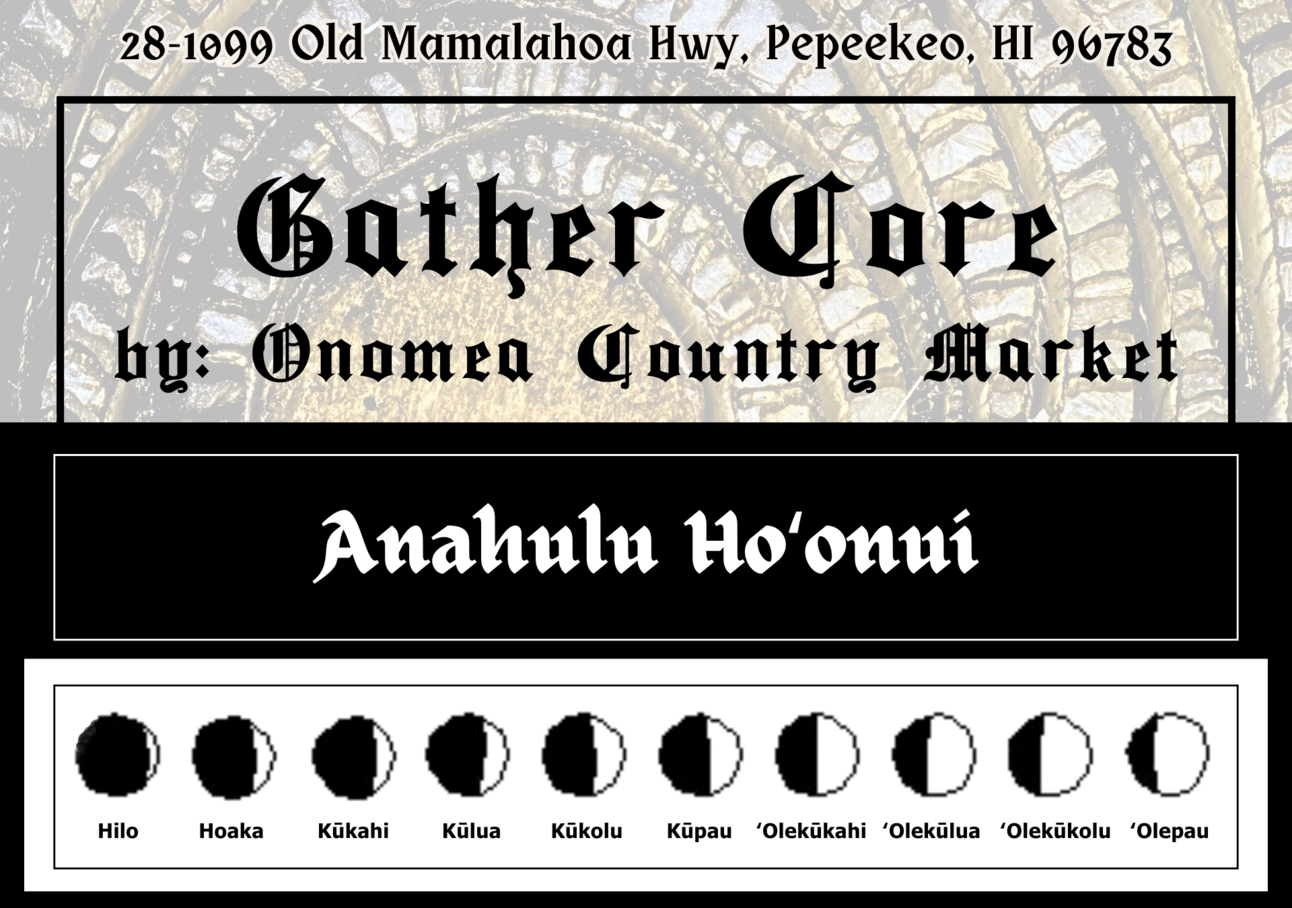
Anahulu Hoʻonui
 | Welcome to Gather Core, a newsletter by Onomea Country Market, released at the beginning of each anahulu.
core (n.v.adj.) center, heart, gut, mind, innermost, enduring |
Local Produce
| Baked Goods
| Fridge Items
|
Storytelling: Women in STEM
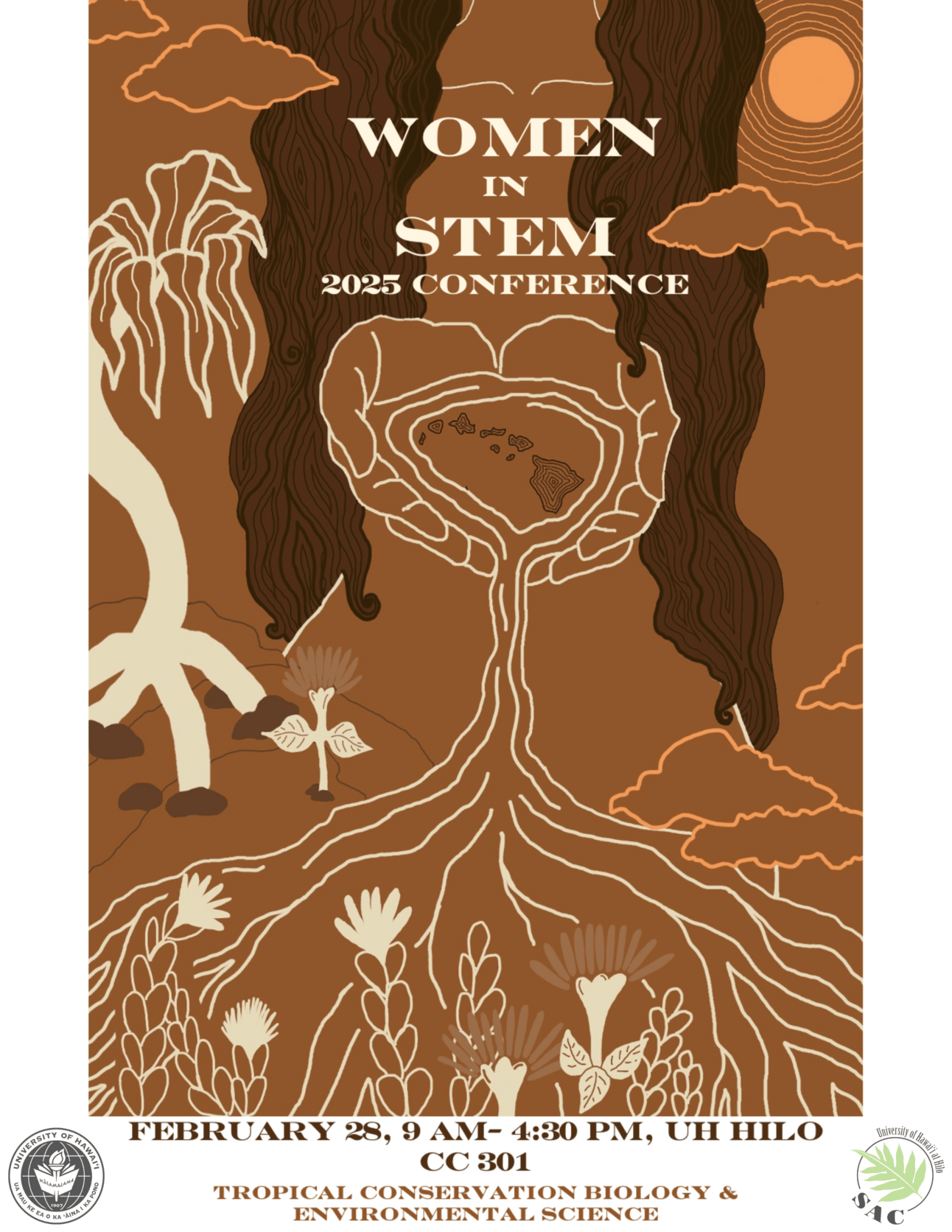
The 2025 Women in STEM conference was held at UH Hilo; I had the opportunity to attend and listen to incredible women in science share stories. Mahalo to keynote speaker Aunty Kekuhi Kaliʻikanakaʻoleohaililani for sharing her Mele Moʻokū, an oli for when visiting a place, that she encourages is for everyone.
Aloha e _____ (name of island/land) E _____ (mountain) e … Aloha! E _____ e (fresh/salt water)… Aloha! Eia mākou: ʻo _____ (your home) ʻo _____ (your mountain) ʻo _____ (your water) ʻo _____ ke kanaka (your family) I ola ʻoukou, I ola makou nei … | Love to you _____ (name of island/land) To you (mountain)… my affection To you (fresh/salt water) … every kindness Here I am with my family: _____ our homeland _____ our mountain _____ our water _____ our human relations Life to you. Life to us. Our lives are interdependent |
For readers who don’t work in science or perhaps even aren’t interested in it; I want to encourage with a takeaway from the conference - that everyone engages with science in some way. Everyone is apart of the environment, the Honua, as Aunty Kekuhi says, and although we may have been taught a specific idea of what science is I encourage us to challenge and expand upon that idea.
The 1st panel of the conference was titled Reclaiming Science: Weaving Together Identity, Culture, & Place-based Experiences. Panelists Trisha Olayon, Noelani Puniwai, Ulu Ching, and Pomai Bertelmann spoke a lot about the role women have in science. I loved what Ulu Ching said; wāhine is not a monolith and how everyone has different feminine energies we bring while making space for one another’s. Something they frequently included in each topic was the incredible contributions women make in these spaces and the specific energy we bring. That was so empowering to be apart of; I can’t emphasize enough what inspiring speakers these women are. Ulu Ching speaks on what science means to her; she says “science is the process, knowledge is the product, and wisdom is the ability to apply the knowledge, the ability to survive in a state of pono where your survival doesn’t take away from anyone else’s ability to survive and thrive… the science is the process of understanding and knowing place so well that your practice and the way you engage in that place is confirmed by… the relationship and the intentional inquiry that you go through. The wisdom comes when you know how to move in that space so that your footprint isn’t one that harms place or people.” The panelists were asked about steps we can take to make STEM more inclusive and representative of the vast multitude of ways of knowing and knowledge systems that have existed before and after Western knowledge systems became dominant. Noelani Puniwai speaks on aloha being the answer and how science is a tool for her to aloha this ʻāina and learn about the people and places that raised her. Now as a professor, science is her tool to “teach people how to aloha ʻāina and aloha their places and spaces.” She says too that if the science isn’t helping aloha something, then that’s not the kind of science she does. A lot of definitions of science aren’t about that but that’s in her definition, aloha to place. Later in the panel, and also in the beginning with Aunty Kekuhi, it was noted that we can’t skim over the depth of aloha, that it’s not just a word or something put forward; it’s an action and an exchange. Later in the panel she elaborates to say that “if everyone loved their place, Hawaiʻi would be thriving and healthy. If everyone wasn’t afraid to learn to spend that time to really learn so much about that place that they love it and they care for it like it’s their own. If everyone just loved the place they live in and took care of it and mālama it or found a mānu that they love or a stream that they want to love, and if we each find something that we want to love and don’t let excuses take up our spaces, this place would be thriving.” Pomai Bertelmann uses the waʻa as a mode of storytelling to highlight the importance that everyone has a role and a space. Her relative told her of how it used to be in Waimea, that “every ʻohana took care of one thing… they had the pipi, they took care of the pipi, and down the road they took care of the vegetables, these guys down the road had chickens, these guys down the road get all the puaʻa, and so on and so forth. What is the one thing we do here in Hawaiʻi that can help make a difference… something that is in our naʻau that we want to do.” Collectively, we can help the land to continue to live “wherever your ʻāina aloha is.”
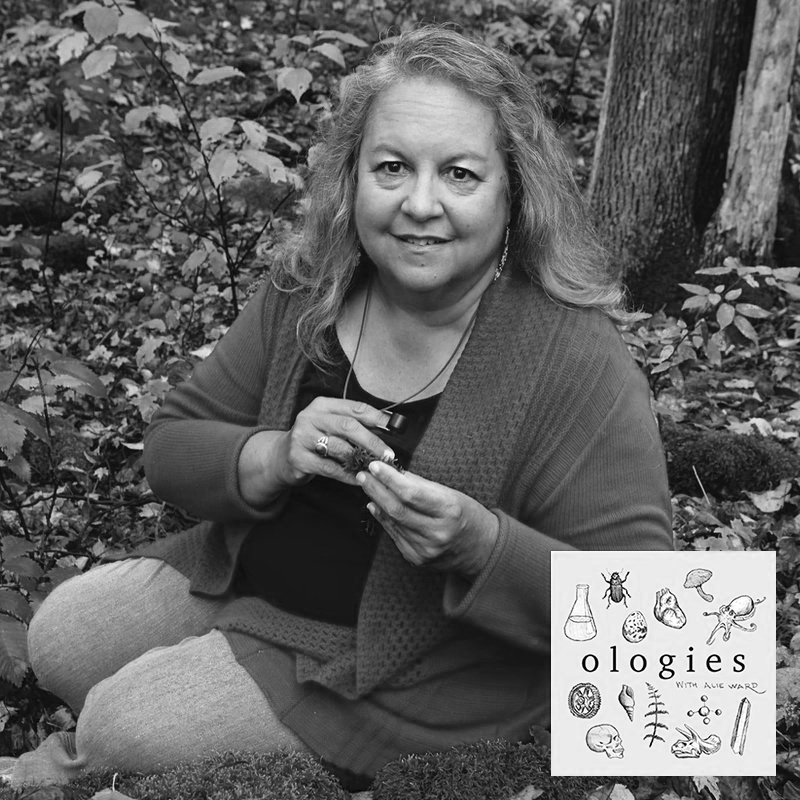
The 2nd panel was Resonating Narratives: Storytelling & Science Communication with panelists Kathryn Besio, Danya Weber, Carmelita Villalobos, and Sibley Barnette. To start I loved Danya Weber’s mention of Robin Wall Kimmerer, because her books Braiding Sweetgrass, Gathering Moss, and more recently The Serviceberry have been life changing for so many people. She’s a science communicator that has made a big impact. Follow this link to buy her books online or check your small bookstores and library. She also has audiobooks. Below are videos of talks she did while visiting Hawaiʻi and the podcast Ologies when she was a guest. Back at the conference, these panelists gave insight into what it can be like for storytellers in science communication, while also acknowledging that everybody is a storyteller and they want to encourage that. Something Kathryn Besio said that was so potent was about the in-between space. “Stories trouble boundaries"… “How do you connect with people so they see that the things they have to say can trouble those boundaries.” She discusses how we create binaries like male vs female, science vs non-science, academic communication vs non-, which are mostly to frame what we’re talking about more easily but "we know the more interesting stuff is in that in-between space where things are less intelligible and that’s what we’re trying to learn about" and there’s so much of that space. We’re entering that space with storytelling trying to reach these narratives and then using narratives in ways that open up space for more people to be involved; “to be scientists or know science or support science.” Another question asked was about a time that a science communicator created an “aha moment” or pivotal moment for them, which is a question that always has interesting stories to answer. However, I liked that it lead into discussion from Sibley Barnette about how important it is to not just have that aha moment but to build relationships with people who consistently make us feel inspired. Danya also mentioned how inspiring for the future of this work it has been for her to teach kids. She talks about how excited these kids are to protect manu that they may have never even seen, but they care about so much. Although it can be daunting, as Sibley spoke on, to try to keep a level of positivity for the future while also sharing important information about invasive species and the threats native species and the environment faces; stories like Danya shared are a reminder that there will always be people who care.
Songs of the Anahulu
Selected by Cora
Selected by Kelsey Bunting
Community Happenings
Onomea Farm Hub is offering 2 internship positions through the Kapili Oihana program. Apply by March 14th, 2025. Find more information at instagram.com/onomeahub and in the photos below. Interested candidates can apply at linktr.ee/onomeahub
Hui Mālama I Ke Ala ʻŪlili - huiMAU has 2 open positions: ʻĀina Education Program Specialist & ʻĀina Education Program Assistant. Join their ʻāina restoration crew. Find more information at instagram.com/huimau_ohana and alaulili.com
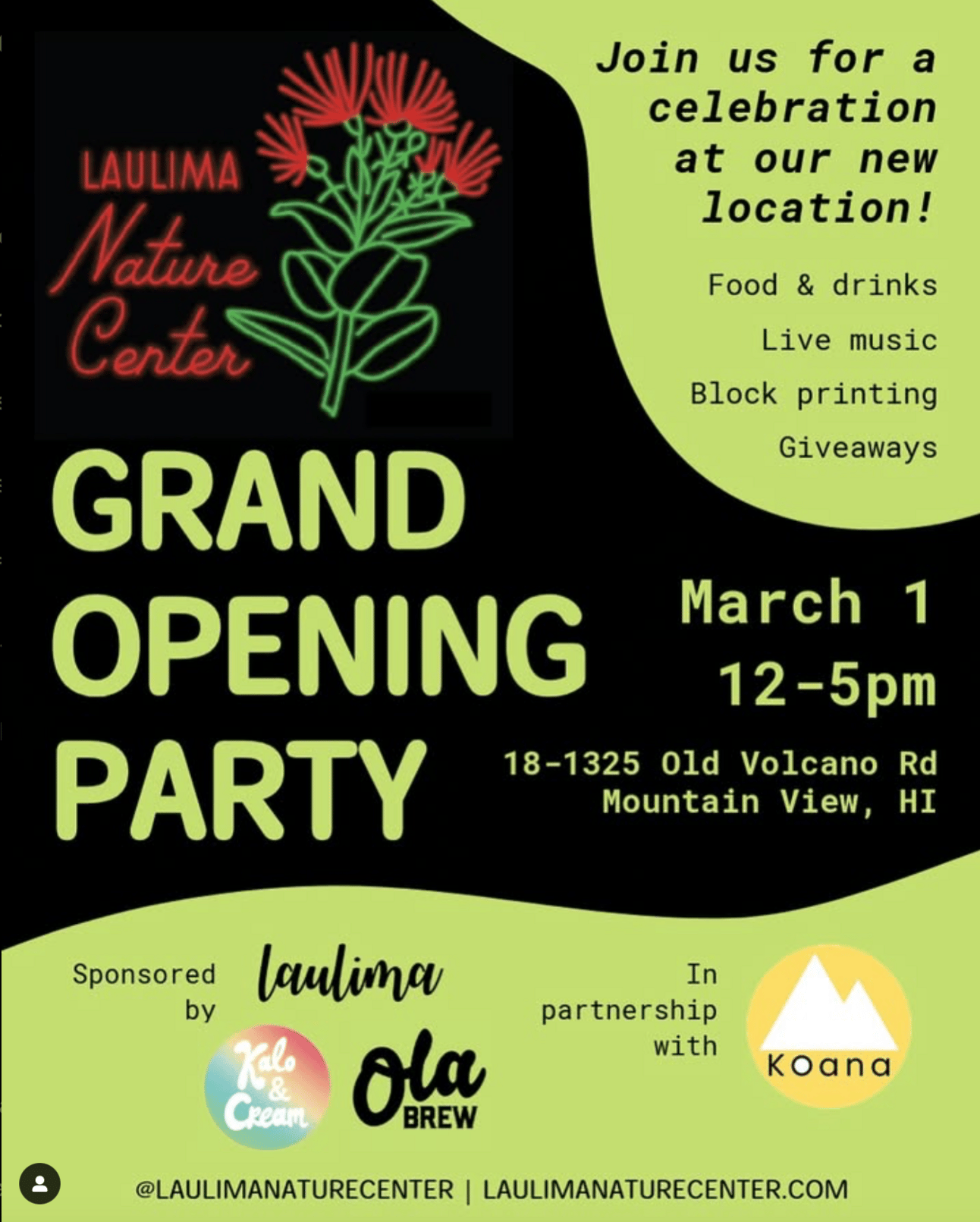
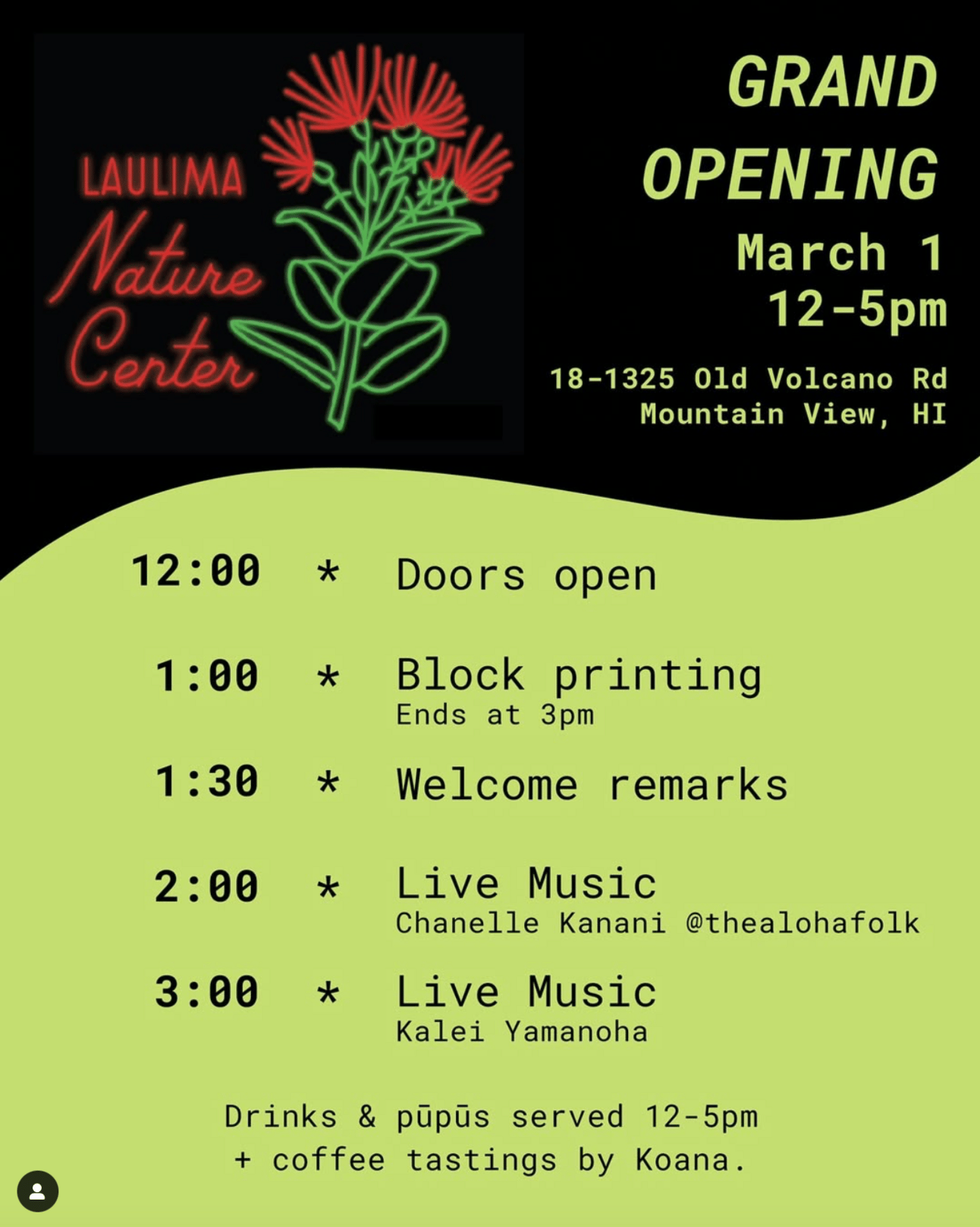
Laulima Nature Center new location open beginning March 4th Tuesday-Saturday 9am-3pm. Located on the way to Hawaiʻi Volcanoes National Park from Hilo. 18-1325 Old Volcano Rd, Mountain View, HI 96771. Find more information at laulimanaturecenter.com and instagram.com/laulimanaturecenter
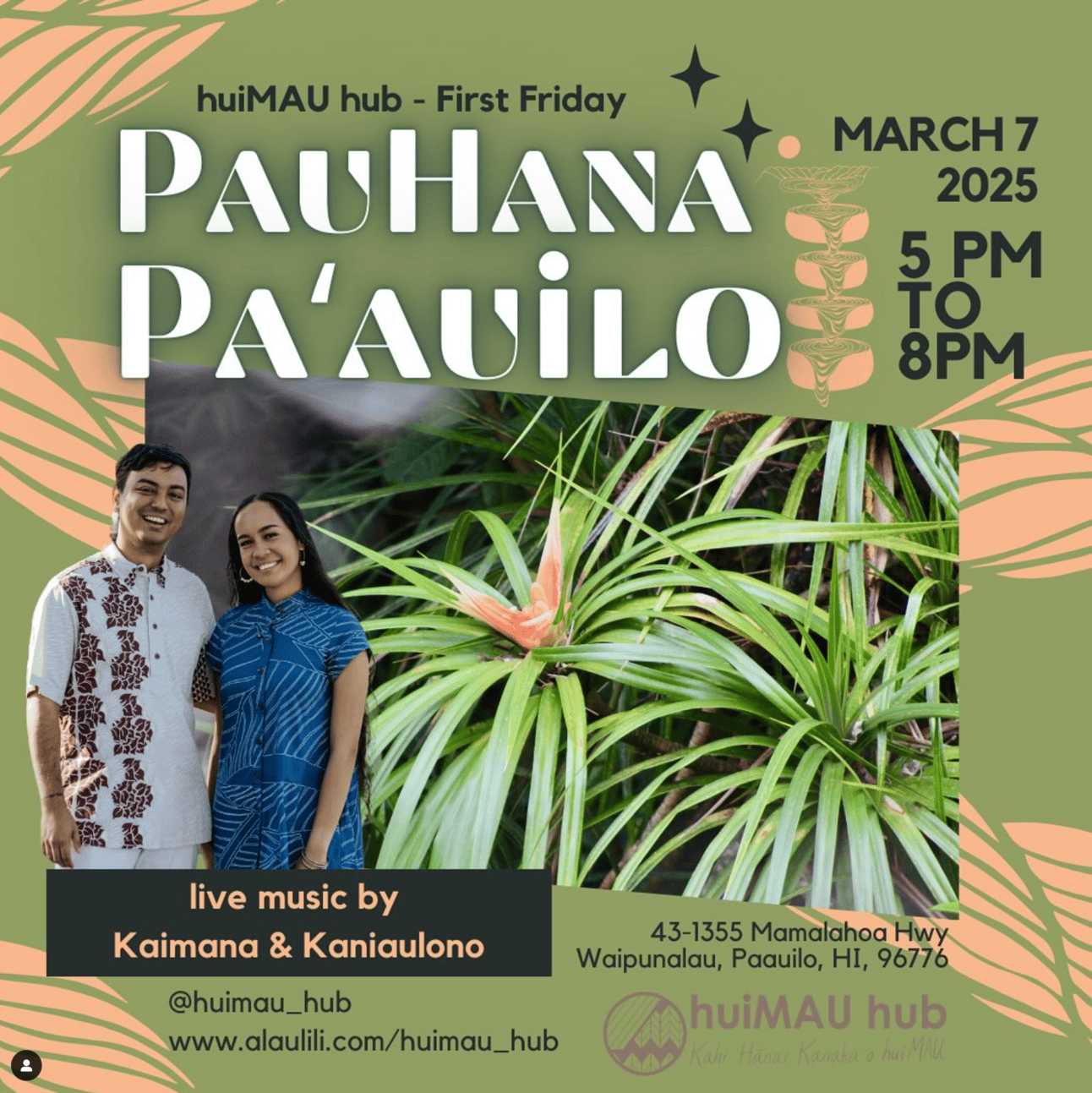
Pauhana Paʻauilo First Friday at huiMAU hub on March 7th from 5pm-8pm. Live music by Kaimana & Kaniaulono. Find more information at instagram.com/huimau_hub and alaulili.com/huimau_hub
Hale O Lono Workday every 2nd Saturday of the month. March 8th, 2025. 9am-11:30am. Join them in connecting with ʻāina through traditional Hawaiian fishpond management in Keaukaha. More information at instagram.com/hale_o_lono and edithkanakaolefoundation.org/sites Potluck encouraged. Recommended to bring tabis, gloves, sunscreen, and water.
 |  |
 |  |
 |  |  |