- Gather Core
- Posts
- Māhoe Hope, Anahulu Hoʻēmi
Māhoe Hope, Anahulu Hoʻēmi
Locally Grown Spotlight & Video of the Mahina Audio Notes

Cora Johnson
September 11, 2025
*Reminder to enable image viewing in your email settings
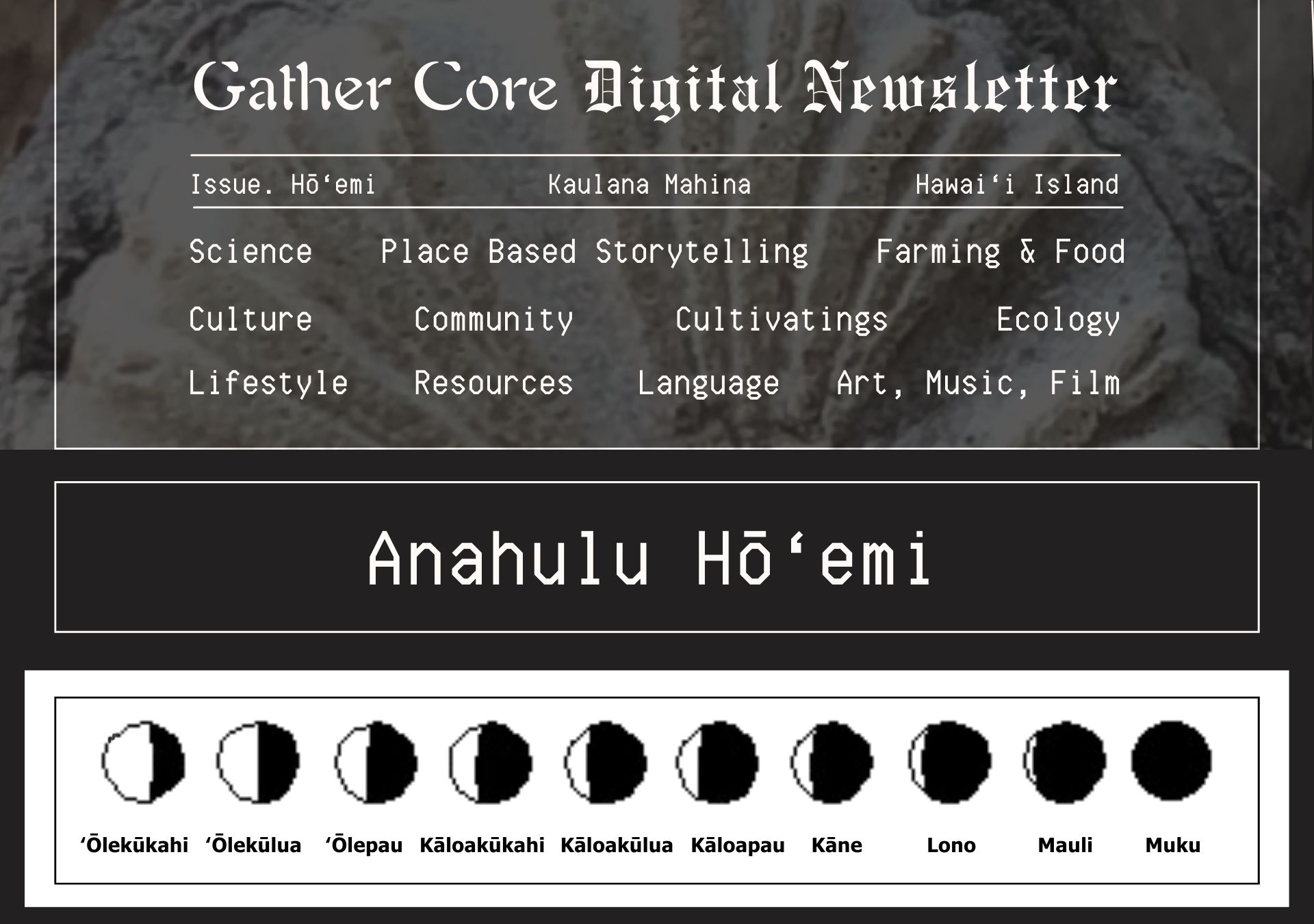
Anahulu Hōʻemi
MĀHOE HOPE – The last twin - First new moon after Māhoe Mua, ending with Muku. Increasing showers and rough seas alternating with good days. Excellent deep sea fishing. A‘u run with the full moon. Fishing effort increases to harvest, prepare and store fish for the coming makahiki season and the wet season.
Kilo in your ahupuaʻa to get more in depth
21-22-23. ‘Ole Kūkahi; ‘Ole Kūlua; ‘Ole Kūpau (Literally, First, Second, and Last ‘Ole Kū; ‘Ole Kūlua was the last quarter; the names of days 21-23 match the names of 7-10 days of the first quarter moon, and mark the transition from more than half-lit moon to less than half-lit moon. )
21.‘Ole Kūkahi
Farming: Not a good day for planting. Cultivate and irrigate other plants. Pruned plants remain cut back longer.
Fishing: Fishing unproductive. ‘Ole means without or nothing. Large projects, meetings, or decisions should not occur today; high improbability of success.
22.‘Ole Kūlua
Farming: Not a good day for planting. Pruned plants remain cut back longer.
Fishing: Fishing is also not good today. The tides run high, currents are erratic, and the winds continue to blow.
23.‘Olepau
Farming: Plant bananas. Cultivate other plants.
Fishing: Good offshore fishing only can be expected. Watch for box jellyfish and Portuguese-man-of-war near the coastline. Kapu of Kāloa in olden days, continues through Kāloakūlua.
24-25-26. Kāloa Kūkahi; Kāloa Kūlua; Kāloapau (Literally, First, Second, and Last Kāloa Kū. Kāloa is short for Kanaloa, a major akua, or god.)
24.Kāloa Kūkahi
Farming: Good day for planting long or tall type plants such as bamboo, sugarcane, string beans, eggplants, mamake, wauke, wapine, and others.
Fishing: Good offshore fishing, especially for shellfish. Deep sea fishing not good. Watch for box jellyfish or Portuguese-man-of-war.
25.Kāloa Kūlua
Farming: Good for planting anything but potatoes, melon, or bananas.
Fishing: Good reef fishing at night. Bad weather with high seas. Watch for box jellyfish or Portuguese-man-of-war.
26.Kāloapau
Farming: Plant bamboo, sugar cane.
Fishing: Excellent torch fishing in the evenings on the reef due to the low evening tide. Limu and other shellfish are exposed in the tide pools.
27. Kāne. (The name of a major akua)
Farming: Excellent day to plant anything. In the old days this night was reserved for ceremony and ritual and no farming or fishing occurred.
Fishing: Good reef fishing with pole and torch. Good diving for sea urchins. Very low tide. Kapu of Kāne in olden days, continues through Mauli.
28. Lono. (The name of a major akua)
Farming: Excellent day for planting any type of plant especially those that provide food.
Fishing: Excellent for pole fishing, torch fishing, and diving. Tide low, sea calm, sand deposited on shore.
29. Mauli (“spirit”; Malo: “fainting”; Kepelino: “last breath”)
Farming: Excellent day for all styles of planting any variety of plant.
Fishing: Fishing is good for all styles of fishing. It is also believed that today is a good day to get married.
30. Muku (“Cut-off.” The new moon; the end of the moon cycle. The moon is in front of the sun: its backside is lit, and its frontside, facing the earth, is dark.)
Farming: Bananas planted this evening will bear a stalk one maku in length, which is approximately 4 feet long. Do not plant taro or sweet potatoes.
Fishing: Excellent for all kinds of fishing including diving for squid and octopus. The tides are low which trap fish in tide pools and loko iʻa.
Sources
Prince Kūhiō Hawaiian Civic Club Moon Calendar (direct quotes for farming & fishing); https://archive.hokulea.com; http://kohalacenter.org Kalei Nu‘uhiwa; http://wpcouncil.org; http://nupepa-hawaii.com; Nā Inoa Hōkū: Hawaiian and Pacific Star Names by Johnson, Mahelona, Ruggles
 | Welcome to Gather Core, a newsletter by Onomea Country Market, released at the beginning of each anahulu.
core (n.v.adj.) center, heart, gut, mind, innermost, enduring |
*Stay up to date with changes throughout the anahulu (additions or if we’ve run out of stock) by checking back in with this issue on our newsletter’s webpage - updated daily https://gathercore.beehiiv.com
Local Produce Available starting Fri 9/12 Updated Wed 9/17
Available starting Fri 9/19
| Baked Goods
| Tropical Dreams Icecream Flavors Salted Caramel, Coconut Sorbet (DF), Chocolate Coconut Macnut, Chocolate Fudge, Tahitian Vanilla, Kona Coffee |
Locally Grown Spotlight: Rambutan
 |  |  |
Mahalo to Old Mamalahoa Orchards for supplying us with fruit and these beautiful photos!
Rambutan, a small white fleshy fruit with a leathery red skin covered in hairs; has a sea urchin-like appearance. It has a sweet, fragrant, slightly tangy flavor and is juicy. It’s typically eaten fresh and in desserts but can be added to savory dishes like curries. We love a rambutan smoothie paired with apple banana, lilikoʻi juice, and other seasonal fruits.
Rambutan is native to the Malaysian Peninsula of Southeast Asia. In the Sapindaceae family, they’re related to lychee and longan. Indonesia, Malaysia, and Thailand are the biggest cultivators. The name comes from the Malay word rambut meaning ‘hair’.
They are high in antioxidants, fiber, vitamins, minerals (specifically Copper), proteins, and carbohydrates. The flesh can be eaten to ease fever and digestive issues. The seeds can be cooked and eaten for nutritional value; a popular snack in various Asian countries (seeds toxic when raw). The dried skin is a commonly used astringent. The leaves can be used topically as a bandage to ease headaches. The roots can be consumed to reduce fever. *Always do your own research and do small test applications first to see how your body reacts.
Depending on the weather patterns between wet and dry seasons in Hawaiʻi, rambutan trees can have more than one fruiting season. They can have inconsistent flowering and fruiting because flowering occurs due to water stress. The main season is July to August with a minor season from April to May. They are propagated by air layering, grafting, budding, and cuttings. They attract many pollinators and can be a great addition to an agroforestry system in USDA zone 10 or warmer.
Recipes


“In Malaya, a preserve is made by first boiling the peeled fruit to separate the flesh from the seeds. After cooling, the testa is discarded and the seeds are boiled alone until soft. They are combined with the flesh and plenty of sugar for about 20 minutes, and 3 cloves may be added before sealing in jars.” https://www.hort.purdue.edu/newcrop/morton/rambutan.html#Food%20Uses
Sources: https://pmc.ncbi.nlm.nih.gov/articles/PMC10345721/; https://rambutan.com, https://hilo.hawaii.edu/panr/writing.php?id=167; https://www.ctahr.hawaii.edu/uhmg/conference/downloads/Tropical_Fruit_and_Nut_Master_Gardening_Oct_2010.pdf
Video of the Mahina
In Issue Hoʻonui the video is announced, Issue Poepoe reminder to watch, & Issue Hōʻemi shares reflections and context in the form of audio notes by Chase Mawae.
The Sand Island Story is a 24-minute documentary produced in 1981 by Windward Video (Victoria Keith & Jerry Rochford). It was shot in 1979 & 1980 and documents 4 months of Sand Island residents attempts to forestall eviction by the State of Hawaiʻi. Ultimately their efforts failed and the people of this shoreline fishing community watched as bulldozers smashed their homes and destroyed their community, in order to create a public park.
Can email [email protected] with comments
Song of the Anahulu
Hoʻihoʻi Ea by Kanakaweli feat. Kahoʻiwai
Selections by Māwae - vinyl DJ available for events. Contact @braddahmawae on Instagram or [email protected] for inquiries.
Hub Happenings
Register for The Lei Bar upcoming workshops at

Community Happenings
Kupukupu Unfurling: Laulima Nature Center Art Exhibition & Fundraiser is seeking donated artwork celebrating Hawaiian species. Submissions open Sept. 1st-30th.
Hale O Lono Workday every 2nd Saturday of the month. Sept. 13th, 9am-11:30am. Join them in connecting with ʻāina through traditional Hawaiian fishpond management in Keaukaha. More info at instagram.com/hale_o_lonoand edithkanakaolefoundation.org/sites Potluck encouraged. Recommended to bring tabis, gloves, sunscreen, and water.
Aloha Vintage Exchange on Sat Sept. 13th, 5pm-9pm at The Megalab. Bring at least one piece of aloha wear to exchange. Celebrate vintage aloha and combat fast fashion. RSVP at https://docs.google.com/forms/d/e/1FAIpQLSf8lWvKfHDIWADTETcXXbwlEJh0meKCfkjZ-13u7yKxZB-Uxw/viewform
Pūtahi 7: Indigenous Arts of the Pacific Event on Sept. 14-28th at Kawananakoa Gym in Keaukaha
Book Signing Event at Ka Waihona in Island Nation on Tuesday Sept. 16th at 3pm. Talk about pilialoha and kuleana with Nikki Van De Car, who wrote The Invisible Wind, and Keala Kendall, who wrote How Far I’ll Go: A Twisted Tale. Find more info at https://www.kawaihona.com
Hala Festival at Makuʻu Market on Sat Sept. 20th, 9:30am-3pm. Live music, keiki activities, workshops, food, craft vendors, and educational displays. Free native plant adoption through Lāʻau Love, a county initiative. Find more info at https://halafest.com
Loko Iʻa Storytime w/ Lanihuli Kanahele at Laulima Nature Center for the first Keiki Conservation Club gathering on Sun Sept. 21st, 12pm-1pm. laulimanaturecenter.com
Exploring Hawaiʻi Livestock 6 week series Sept. 23rd-Oct. 28th. Register at gofarmhawaii.org
Small Business Development Holomua Workshop Series w/ INPEACE Hawaiʻi on Tues Sept. 30th, 10am-11:30pm online via Zoom. Register at inpeace.org/events
Hawaiʻi Farmers Union 15th Annual Convention at Kahaluʻu Ma Kai in Kona on Sat Oct. 25th. Annual meeting & elections on Sun Oct. 26th. Find more info and register at https://docs.google.com/forms/d/e/1FAIpQLSdoA3F0reTVfcXEc1BoD7rYFHffuZXXWVhcJk_SdHtmmF2ruA/viewform
Onomea Country Market is a distribution location for Hawaiʻi Farm-To-Car by Hoʻōla Farms; an online farmers market for local produce, meat, eggs, cheese, baked goods, value-added products, and more. SNAP/EBT accepted. Shop online Friday-Monday and pickup on Wednesdays from 3pm-5pm at the Pepeʻekeo location. https://hoolafarms.org/hawaii-farm-to-car/
 |  |
 |  |
 |  |
 |  |
Follow this link https://linktr.ee/gathercore to make submissions for Community Happenings and/or Maker Spotlights.
 | Onomea Country Market is a family style run corner store located at the end of the scenic route in Pepeʻekeo. We carry local produce from Hawaiʻi farms and locally made products from Hawaiʻi farmers, artists, and makers. We also carry grocery and convenience items. Along with Piʻilani Kitchen and The Lei Bar, we are apart of Onomea Hub. Our focus is place based storytelling. We aim to offer a space where stories and resources are shared, people and the work they do is uplifted, and readers stay updated. Living with the moon phases. |